III The Method
Predictability Is the Vulnerability
Almost every ground-based threat model depends on a known route, which is what makes removing the route a security decision rather than a luxury.
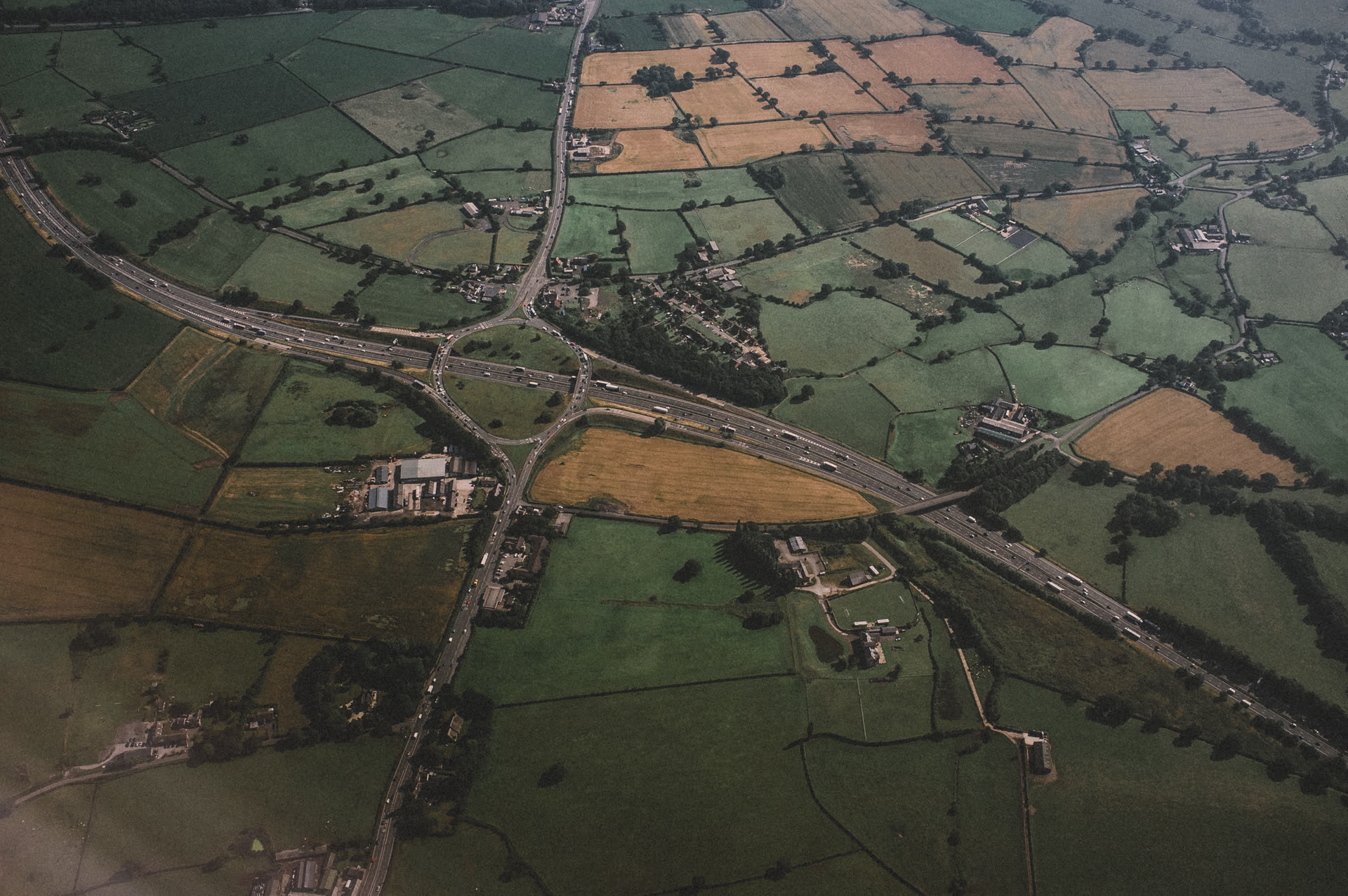
Rotary transport reads as indulgence, and the reading survives because the alternative case is rarely made in terms a sceptic would accept. Made properly, it is not a comfort argument at all. It is an argument about removing a precondition.
Start with what a threat against a moving principal actually requires. Not capability — requirements, in the sense of things that must be true before an attempt is feasible at all.
It requires a known departure point. It requires a plausible route between that point and a destination, narrow enough that a position can be taken on it. It requires somewhere the movement slows or stops, because a vehicle at speed is a poor target and a vehicle at a junction is a different proposition. And it requires time: to observe the pattern, confirm it repeats, and prepare against it.
Those four are the preconditions, and the useful question about any transport arrangement is which of them it removes.
What the air leg removes
Ground movement supplies all four generously, and it does so without anyone intending it. A residence is a fixed departure point. Road networks are finite, so plausible routes are few. Traffic guarantees that movement slows at places determined by the network rather than by choice. And a principal who travels to an office on weekday mornings is generating pattern data continuously, for free, to anyone who cares to collect it.
Removing the ground segment removes the middle two outright. There is no route in the relevant sense — the path is not a corridor that can be occupied, and it does not pass through junctions where movement is compelled to slow. Traffic, protest routes, road closures and pre-planned interception all depend on predictable ground movement, and each of them is a category of exposure that disappears with the segment rather than being mitigated within it. The same logic governs the fixed-wing case at the terminal end: a principal moving from vehicle to aircraft and from aircraft to vehicle, at a dedicated facility, does not pass through an intervening public space at all — no crowd, no terminal, no published schedule, no fixed route.
That is a real reduction and it is worth stating without decoration. It is also not the whole picture, and the part that follows is the part rarely written down by anyone selling the service.
What it does not remove
Two of the four preconditions survive, and one of them is arguably strengthened.
The airfield is a fixed point. It cannot be otherwise; that is what an airfield is. Departure and arrival both occur somewhere known, reachable and finite in number, and the substitution has therefore relocated the fixed points rather than eliminated them. There are fewer of them and they are more controlled, which is a genuine improvement, but a principal who consistently uses one facility has replaced one predictable location with another.
The schedule is a signal, and here the regulatory environment works against discretion rather than for it. In the United Kingdom, an international general aviation movement must be notified in advance: a General Aviation Report submitted no earlier than forty-eight hours and no later than two hours before expected departure, extending to twelve hours where the police notification under Schedule 7 of the Terrorism Act 2000 applies on Common Travel Area routes. Changes within that window are not administratively free — an additional passenger, a change of aircraft or a change of aerodrome requires resubmission before the deadline, and the practical consequence of missing it is a delayed flight. Failure to comply attracts a civil penalty of up to £10,000 per breach.
None of that is objectionable, and the emergency case is expressly accommodated. But it means the air movement is a declared movement, made in advance, with an identified aircraft and an identified aerodrome, and with limited scope for late alteration. Ground movement declares itself to nobody. The trade is therefore not simply less exposure; it is a different exposure — unpredictability of path purchased at the cost of advance notification and a documentary record.
A serious assessment holds both of those at once. An arrangement sold as removing exposure, without the second half, is being sold rather than assessed.
The variable that survives everything
Of the four preconditions, time is the one no transport arrangement touches, and it is the one that determines whether any of the others matter.
Pattern is accumulated, not observed once. A single movement supplies almost nothing; the same movement repeated supplies a departure window, a preferred facility, a typical party size and a set of dates that correlate with something knowable from open sources. Which means the security property of an arrangement is not a property of the journey at all. It is a property of the sequence of journeys, and it degrades with repetition regardless of how the individual leg is flown.
That has an unwelcome implication for how these decisions are usually made. The question is not which mode is safer, because asked about one journey the answer is nearly always the same and nearly always the more expensive one. The question is what the last two years of movements would tell somebody who assembled them — and that question is answerable, uncomfortable, and almost never asked before the arrangement is procured.
The other direction entirely
There is a second use of the same capability that inverts the objective, and it is the more interesting one.
Sometimes the point is to be seen. A principal arriving in a manner that communicates presence, access or standing is making a statement, and the arrival is chosen for what it says rather than for what it conceals. That is not a security failure or a lapse in discipline; it is a different mandate, with a different measure of success, and it is a legitimate one in a negotiation, at an event, or in a jurisdiction where visible standing is itself protective.
What matters is that the two objectives are incompatible in a single movement and must be chosen between deliberately. The failure is not choosing either — arriving conspicuously while believing the arrangement is discreet, which happens when the arrangement was procured for comfort and its signalling properties were never considered.
The correct frame is subtractive rather than protective. Nothing here defends a principal against anything. What it does is remove conditions that a category of threat requires in order to be attempted — and knowing precisely which conditions remain is the whole of the value, because those are the ones everything else has to be built around.
Sources
- Home Office / Border Force — General Aviation Report guidance: notification windows for international general aviation flights, Terrorism Act 2000 Schedule 7 police notification, and civil penalties
- Providing information about international general aviation flights — GOV.UK collection
- Helicopter Charter — Privy Consul
- Private Jet Charter — Privy Consul